
Neurodiversity Management Training
A practical four-day programme for managers, team leaders and HR professionals who want to manage neurodivergent employees with greater confidence. Learn how to adapt communication, workload, feedback, performance management and the working environment while recognising individual strengths and maintaining clear expectations.
Good Intentions Are Not Always Enough to Manage Neurodivergent Employees Well
Managers can want to be supportive while still being unsure what to change, what is reasonable or how to maintain consistent expectations. This programme gives managers practical approaches they can use in everyday management.
You explain a task clearly but an employee interprets it differently or misses parts of the instruction.
Make communication clearer without becoming patronising.
Managers learn how to use clear language, written follow-up, defined outcomes, structured meetings and appropriate communication formats while still treating the employee as a capable professional.
An employee is capable but struggles with deadlines, competing priorities or switching between tasks.
Manage the workflow as well as the person.
Explore practical techniques for breaking down work, clarifying priorities, reducing unnecessary task switching and using tools that support planning, memory and executive functioning.
Behaviour such as limited eye contact, direct communication or needing processing time is being interpreted as attitude or disengagement.
Separate assumptions from actual performance.
Managers develop greater understanding of different communication and processing styles so performance conversations can focus on evidence and workplace outcomes rather than assumptions about behaviour.
An employee discloses that they are neurodivergent and the manager is unsure what to say or do next.
Respond confidently and constructively.
Managers learn how to listen, maintain appropriate confidentiality, ask about workplace barriers and involve the correct internal processes without assuming that everybody with the same diagnosis needs the same support.
You are worried that making an adjustment for one employee means treating everybody else unfairly.
Understand the difference between equality and identical treatment.
The programme helps managers consider barriers, reasonable adjustments and individual needs while retaining appropriate standards, responsibilities and organisational expectations.
Managers focus so heavily on difficulties that the employee's strengths and potential are overlooked.
Introduce strengths-based management.
Managers learn how to identify capability, align responsibilities where appropriate, support autonomy and provide opportunities for neurodivergent employees to develop and progress.
Manage the Individual, Not the Stereotype
Neurodivergent employees are not one group with one set of management needs. Autism, ADHD, dyslexia, dyspraxia and other forms of neurodivergence can affect people differently, and two employees with the same diagnosis may require very different approaches.
This training helps managers understand those differences without reducing an employee to a label.
Managers explore communication, workload, sensory environments, meetings, deadlines, feedback, performance, adjustments, strengths and career development through a practical management lens.
The aim is not to remove standards or accountability. It is to help managers create the conditions in which employees can understand expectations, demonstrate their capability and contribute effectively.
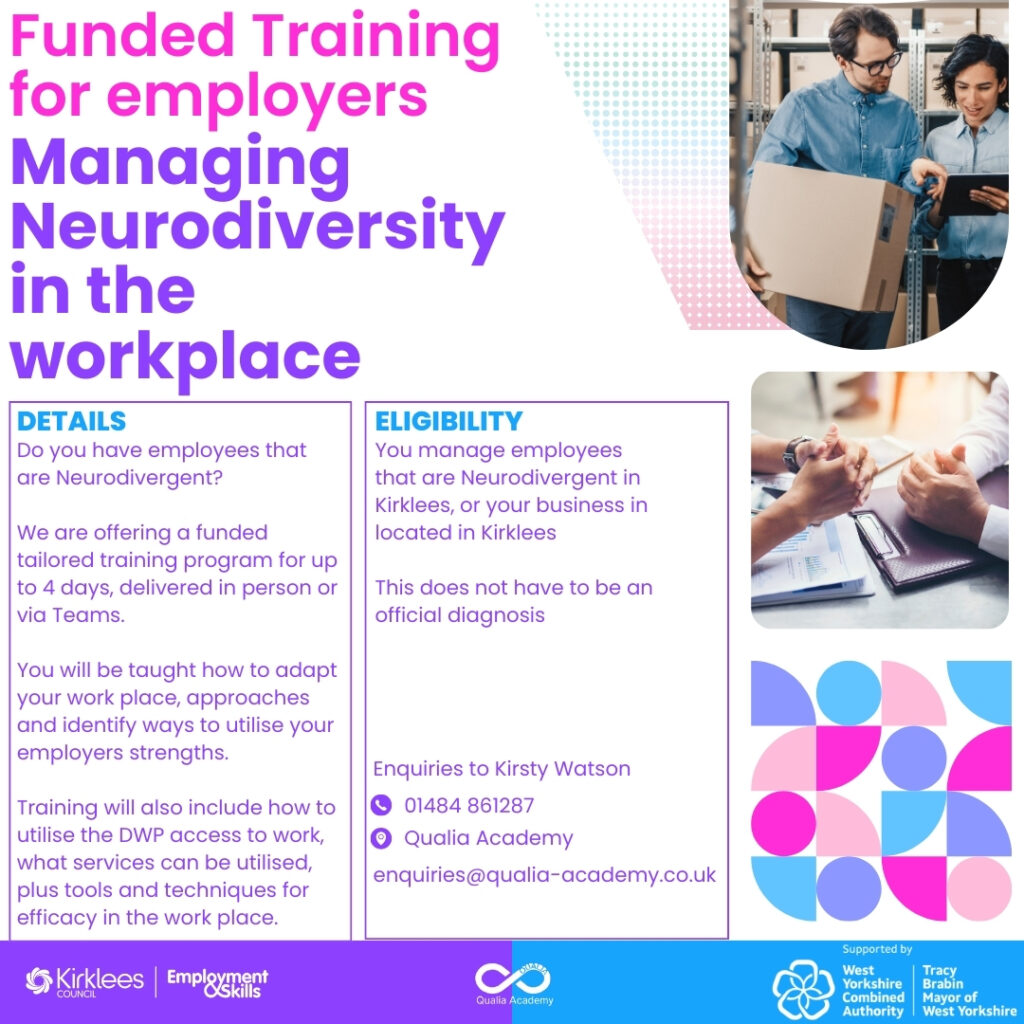
Four Days Focused on Managing Neurodivergent Employees Well
The course moves beyond general neurodiversity awareness and focuses on the actual decisions, conversations and situations managers encounter in the workplace.
Understanding Neurodiversity as a Manager
Build a practical understanding of neurodivergence and explore how management practices can create or remove unnecessary workplace barriers.
- Understanding neurodiversity
- Autism, ADHD, dyslexia and dyspraxia
- Moving beyond stereotypes
- Individual differences within diagnoses
- Masking and workplace pressure
- Executive functioning
- Sensory processing
- Understanding communication differences
- The role of the line manager
Managing Work, Communication & Performance
Translate neuroinclusive principles into everyday management practice without lowering expectations or avoiding necessary conversations.
- Giving clear instructions
- Written versus verbal communication
- Structuring meetings
- Planning and prioritisation
- Managing deadlines
- Reducing unnecessary task switching
- Giving effective feedback
- One-to-one meetings
- Managing performance objectively
- Handling difficult conversations
Disclosure, Adjustments & Workplace Support
Understand what to do when an employee raises neurodivergence, disability or workplace barriers with their manager.
- Responding to disclosure
- Confidentiality
- Discussing workplace barriers
- Reasonable adjustments
- Flexible working approaches
- Sensory-friendly environments
- Assistive technology
- DWP Access to Work
- Workplace assessments
- Working appropriately with HR
Strengths, Retention & Neuroinclusive Leadership
Move from simply responding to problems towards creating management practices that help neurodivergent employees contribute, progress and remain within the organisation.
- Strengths-based management
- Recognising capability
- Role and task alignment
- Supporting autonomy
- Career development
- Inclusive team working
- Managing conflict and misunderstandings
- Supporting employee retention
- Reviewing adjustments
- Creating a manager action plan
What Managers Should Be Able to Do Differently After the Course
The focus is on practical management behaviour that can be used after the training rather than awareness that stays inside the training room.
Give Clearer Instructions
Structure tasks, outcomes and priorities in ways that reduce ambiguity without micromanaging the employee.
Improve One-to-Ones
Make regular management conversations more structured, accessible and useful for both manager and employee.
Manage Performance Fairly
Separate measurable performance issues from assumptions about communication style, body language or behaviour.
Identify Workplace Barriers
Look at the task, environment and management process rather than assuming every difficulty sits with the individual employee.
Use Strengths More Effectively
Recognise valuable skills and working approaches that can be missed when management focuses only on deficits.
Have Better Adjustment Conversations
Discuss what creates a barrier, what may help and how adjustments can be reviewed rather than making assumptions based on a diagnosis.
Create Confidence at the Point Where Inclusion Actually Happens
For Managers
Understand how neurodivergence may influence communication, planning, concentration, sensory needs, working memory, organisation and workplace interactions.
Learn what to do when an employee asks for support rather than worrying about saying the wrong thing or making assumptions.
Develop practical ways to manage performance, feedback, workload and expectations while still recognising individual working needs.
Build confidence having conversations about disclosure, adjustments and workplace barriers and knowing when HR or specialist support should be involved.
For Organisations
Inclusive policies have limited impact if managers do not know how to translate them into everyday management behaviour.
Developing line-manager capability can help create more consistent approaches to communication, adjustments, performance management and employee support.
Better management can also support employee retention by reducing avoidable workplace barriers and helping valuable employees use their strengths more effectively.
Training managers can form part of a wider approach to inclusive recruitment, onboarding, progression, wellbeing and organisational neuroinclusion.
Reasonable Adjustments & DWP Access to Work
Managers do not need to become employment-law specialists, but they do need to understand the importance of responding appropriately when an employee raises a workplace barrier or asks for support.
The course explores reasonable adjustments and helps managers understand how changes to communication, working patterns, equipment, environment or management processes may reduce disadvantage for an employee.
Managers will also learn about DWP Access to Work, including how it can provide additional practical support for eligible employees and how managers can support an employee through the process.
- Recognising workplace barriers
- Having adjustment conversations
- Working with HR and organisational procedures
- Recording and reviewing agreed adjustments
- Assistive software and specialist equipment
- Workplace assessments
- Understanding Access to Work
- Supporting employees without making assumptions
Designed for People Who Manage, Support or Develop Employees
You do not need previous specialist knowledge of neurodiversity. The programme is designed to develop practical management capability.
Four-Day Neurodiversity Management Programme
£1,990 per personThis is a comprehensive four-day management-development programme rather than a short neurodiversity awareness session.
The course focuses on the practical management of neurodivergent employees, including communication, performance, workload, strengths, workplace barriers, reasonable adjustments and Access to Work.
Do Your Managers Know What to Do When a Neurodivergent Employee Needs Support?
Tell us about your managers, workforce and the challenges you want the training to address. We can discuss the four-day programme and how it can be applied within your organisation.
Fill Out an Enquiry Form →Neurodiversity Management Training FAQs
Is this an awareness course?
No. Awareness is part of the foundation, but the four-day programme is focused on practical management. Managers learn how to approach communication, workload, feedback, performance, adjustments, strengths and employee development.
Does a manager need to know an employee's diagnosis?
No. Effective management should focus on the employee, the requirements of the role and any workplace barriers or support needs rather than assuming that a diagnosis tells the manager everything they need to know.
Does neuroinclusive management mean lowering performance standards?
No. The aim is to make expectations clearer and remove unnecessary barriers so that performance can be assessed fairly. Adjusting how someone accesses or completes work is not the same as removing appropriate role requirements or accountability.
Does the course cover reasonable adjustments?
Yes. Managers explore workplace barriers, adjustment conversations, practical examples and how to work with the organisation's HR or people processes where an adjustment may be required.
Is Access to Work included?
Yes. Managers learn what DWP Access to Work is, examples of the support it may provide and how they can appropriately support an employee who wishes to access the scheme.
Who is the programme designed for?
It is particularly suitable for line managers, team leaders, supervisors, HR professionals, senior managers, people teams and others responsible for managing or supporting employees.
How much is the programme?
The complete four-day Neurodiversity Management Training programme is £1,990 per person.
Neuroinclusion That Managers Can Actually Apply
Management Focused
The programme is built around the situations managers experience: instructions, deadlines, one-to-ones, performance, disclosure, adjustments, conflict and employee development.
Individual Rather Than Stereotyped
Managers learn to understand the individual employee and workplace barriers instead of assuming everybody with ADHD, autism, dyslexia or another form of neurodivergence behaves or works in the same way.
Practical Workplace Application
Learning is designed to be taken back into real teams so managers can improve communication, management practice, support and employee experience.
Give Managers the Confidence to Support Neurodivergent Employees Without Lowering Expectations or Making Assumptions
The four-day programme develops practical skills managers can use when communicating, allocating work, giving feedback, discussing performance, responding to disclosure, considering adjustments and developing neurodivergent employees.