

Fire Prevention Day is a reminder that we all have a role to play in ensuring fire safety. By taking proactive steps and being aware of fire risks, we can significantly reduce the chances of a fire occurring in our homes. This year, commit to implementing these fire prevention tips and sharing them with those around you. Together, we can create safer environments for ourselves and our loved ones.
What Are Some Fire Risks and Why Do We need to understand them?
Understanding the leading causes of house fires is essential for effective prevention efforts. According to the UK Fire and Rescue Service, several key contributors play a significant role in the occurrence of these dangerous incidents. According to the Home Office, there were around 25,000 fire incidents in England alone in 2021, with approximately 2,000 of these being primary fires in residential buildings. With over 300 fire-related fatalities reported in the UK each year, awareness of common fire risks is the first step toward prevention.
One of the most prominent causes is cooking accidents, which account for a staggering 50% of home fires. The kitchen is often the heart of the home, but it can also be a hazardous environment if proper precautions are not taken. Common issues include unattended cooking, overheating oil, and kitchen appliances that malfunction or are used incorrectly. Simple actions, like staying in the kitchen while cooking and keeping flammable items away from heat sources, can greatly reduce the risk.
Electrical fires are another major concern, primarily caused by faulty wiring and overloaded sockets. As our reliance on electrical devices grows, so does the risk associated with them. Regularly inspecting and maintaining electrical systems is crucial in mitigating this risk. Homeowners should check for frayed wires, avoid using multiple devices in a single socket, and consider hiring a qualified electrician to assess any concerns.
During colder months, the use of heating equipment such as space heaters and fireplaces increases, leading to a rise in fire incidents. Improper use or lack of maintenance of these devices can result in dangerous situations. It’s vital to ensure that space heaters are kept at least three feet away from flammable materials and that chimneys are regularly cleaned and inspected.
Finally, smoking remains a significant cause of fire-related fatalities in the UK. Carelessness with cigarettes, such as leaving them unattended or falling asleep while smoking, can lead to tragic outcomes. Establishing strict rules about smoking indoors, using proper receptacles for cigarette disposal, and ensuring that cigarettes are fully extinguished can help prevent fires in homes.
Educate and involve your community:
Fire Prevention Day is also an opportunity to engage with your community. Participate in local events or programs focused on fire safety education. Share your knowledge with friends, family, and neighbours. The more people are aware of fire risks and prevention strategies, the safer your community will be.
Fire Prevention Tips:
Install and Maintain Smoke Alarms
Smoke alarms are your first line of defence against fire. The UK Fire and Rescue Service recommends installing smoke alarms on every level of your home and inside bedrooms. Regularly test your alarms to ensure they are working properly and replace batteries at least once a year. It’s crucial to replace smoke alarms every 10 years.
Create an Escape Plan
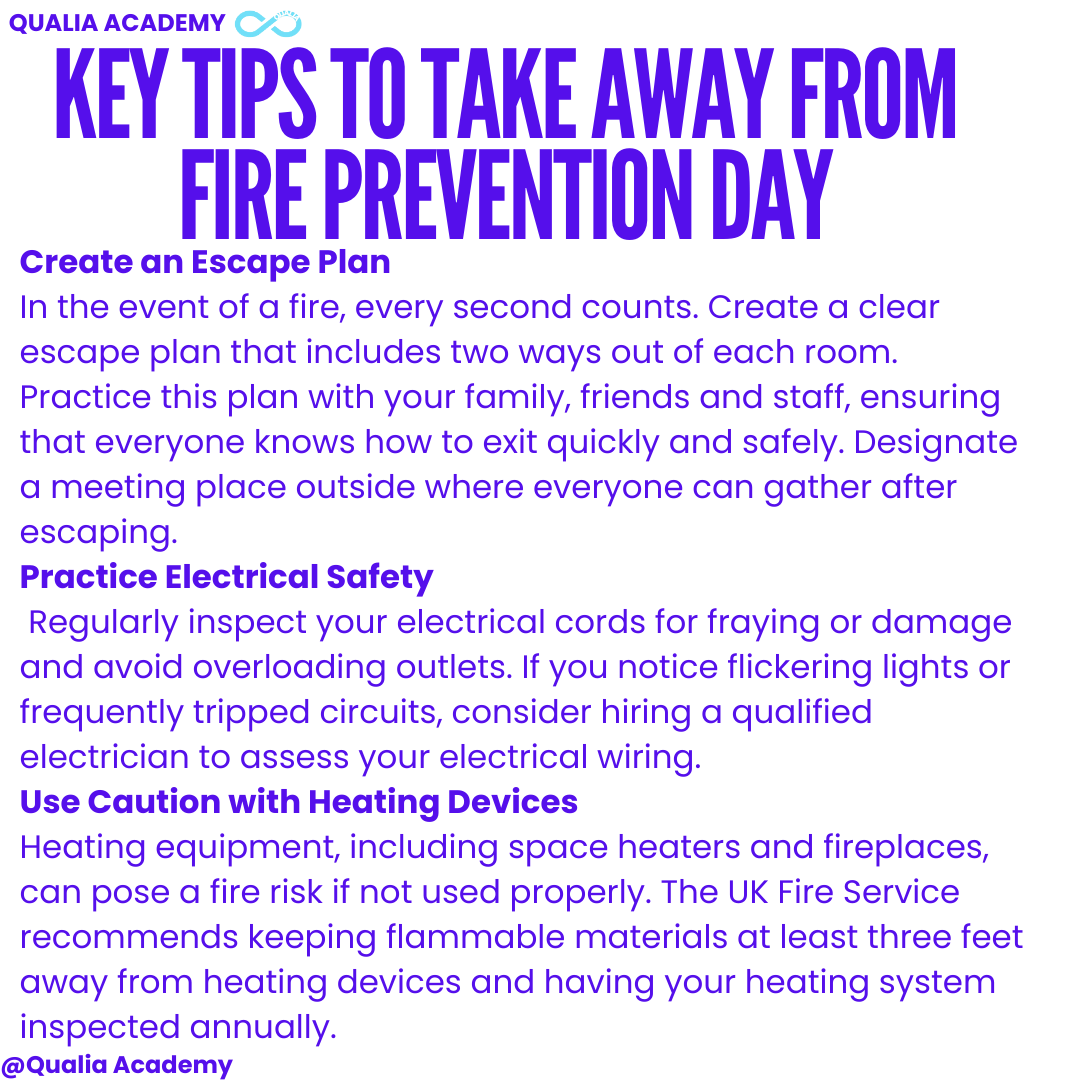
In the event of a fire, every second counts. Create a clear escape plan that includes two ways out of each room. Practice this plan with your family, friends and staff ensuring that everyone knows how to exit quickly and safely. Designate a meeting place outside where everyone can gather after escaping.
Be Cautious in the Kitchen
Cooking remains a leading cause of fires. The UK Fire Service reports that around 50% of all home fires start in the kitchen. Stay in the kitchen while cooking, especially when using oil or frying food. Keep flammable items like dish towels and paper products away from the stove, and always have a fire extinguisher or a fire blanket within reach.
Store Flammable Materials Safely
Store flammable liquids, such as paint thinners and cleaning agents, in appropriate containers and away from heat sources. Ensure these materials are kept in a well-ventilated area, preferably outside your home or in a shed.
Practice Electrical Safety
Faulty wiring is a common cause of fires. Regularly inspect your electrical cords for fraying or damage and avoid overloading outlets. If you notice flickering lights or frequently tripped circuits, consider hiring a qualified electrician to assess your home’s wiring.
Use Caution with Heating Devices
Heating equipment, including space heaters and fireplaces, can pose a fire risk if not used properly. The UK Fire Service recommends keeping flammable materials at least three feet away from heating devices and having your heating system inspected annually.
Maintain Your Garden
Fire safety extends beyond your home. Maintain your garden by keeping it clear of dry leaves, dead plants, and other combustible materials. If you live in an area prone to wildfires, consider creating a defensible space by trimming trees and shrubs away from your home.